Category: Language

3 fundamental problems of translating metaphor (or anything else)

by Dominik Lukeš ·

How hard is it to translate metaphor? Metaphor seems like it should be very difficult to translate. But I’d like to argue that what is difficult about translating it is not the metaphor part but rather how it is used. This makes it no different from any other aspect of language. But because it is…

Read more →


Not ships in the night: Metaphor and simile as process

by Dominik Lukeš ·

In some circles (rhetoric and analytics philosophy come to mind), much is made of the difference between metaphor and simile. (Rhetoricians pay attention to it because they like taxonomies of communicative devices and analytic philosophers spend time on it because of their commitment to a truth-theoretical account of meaning and naive assumptions about compositionality). It…

Read more →

How to read ‘Women, Fire and Dangerous Things’: Guide to essential reading on human cognition

by Dominik Lukeš ·

Note: These are rough notes for a metaphor reading group, not a continuous narrative. Any comments, corrections or elaborations are welcome. Why should you read WFDT? Women, Fire, and Dangerous Things: What Categories Reveal About the Mind is still a significantly underappreciated and (despite its high citation count) not-enough-read book that has a lot to…

Read more →

What does it mean when words 'really' mean something: Dismiss the Miss

by Dominik Lukeš ·

A few days ago, I tweeted a link to an article in TES : What Miss really means < It's always worthwhile re-examining ingrained inequalities http://t.co/GKhjc4VgUP #edchat #ukedchat #feminism — Dominik Lukes (@techczech) May 17, 2014 Today, I got the following response back: @techczech 'really means' talks about origins. It doesn't mean that to me…

Read more →

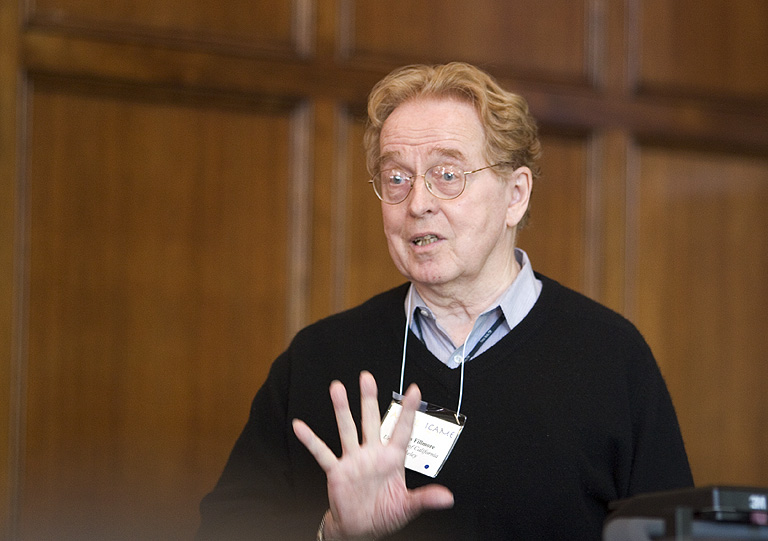
Linguistics according to Fillmore

by Dominik Lukeš ·

While people keep banging on about Chomsky as being the be all and end all of linguistics (I'm looking at you philosophers of language), there have been many linguists who have had a much more substantial impact on how we actually think about language in a way that matters. In my post on why Chomsky…

Read more →

Three books of the year 2013 and some books of the century 1900-2013

by Dominik Lukeš ·

I have been asked (as every year) to nominate three books of the year for Lidové Noviny (a Czech paper I contribute to occasionally). This is always a tough choice for me and some years I don't even bother responding. This is because I don't tend to read books 'of the moment' and range widely…

Read more →

Pervasiveness of Obliging Metaphors in Thought and Deed

by Dominik Lukeš ·

" when history is at its most obliging, the history-writer needs be at his most wary." ( China by John Keay ) I came across this nugget of wisdom when I was re-reading the Introduction to John Keay's history of China. And it struck me that in some way this quote could be a part…

Read more →

Sunsets, horizons and the language/mind/culture distinction

by Dominik Lukeš ·

For some reason, many accomplished people, when they are done accomplishing what they've set out to accomplish, turn their minds to questions like: What is primary, thought or language. What is primary, culture or language. What is primary, thought or culture. I'd like to offer a small metaphor hack for solving or rather dissolving these…

Read more →

Cliches, information and metaphors: Overcoming prejudice with metahor hacking and getting it back again

by Dominik Lukeš ·

[caption id="" align="alignright" width="240"] Professor Abhijit Banerjee (Photo credit: kalyan3)[/caption] "We have to use cliches," said professor Abhijit Banerjee at the start of his LSE lecture on Poor Economics . "The world is just too complicated." He continued. "Which is why it is all the more important, we choose the right cliches." [I'm paraphrasing here.]…

Read more →

Pseudo-education as a weapon: Beyond the ridiculous in linguistic prescriptivism

by Dominik Lukeš ·

[caption id="" align="alignright" width="300"] Teacher in primary school in northern Laos (Photo credit: Wikipedia)[/caption] Most of us are all too happy to repeat clichés about education to motivate ourselves and others to engage in this liminal ritual of mass socialization. One such phrase is "knowledge is power". It is used to refer not just to…

Read more →